※本ページはプロモーションが含まれます
Disclosure: This post contains affiliate links. If you buy through them, we may earn a commission at no additional cost to you. Learn more.
If your journaling has grown past ruled notebooks into watercolor spreads, postcard swaps, or full-on mail art, the paper matters more than the pen. Japan’s Holbein Art Materials — an Osaka-founded art supply house that’s been making paint and paper since 1900 — is the real source behind most of the watercolor-grade paper stocked at Discovery Japan Mall, and it’s a genuinely different category from the 70-90gsm stock in a typical planner. Below are seven real, currently-stocked picks, from a $9 pad of colored paper to an $83 traditional letter-writing kit, organized by what you’d actually use them for, with honest downsides for each.
Prices below are converted from JPY at roughly ¥158/USD as of August 17, 2026, and will drift with the exchange rate, so treat them as ballpark figures rather than checkout totals.
Cold-press texture, weight, and why it matters more than brand
Before picking a product, it helps to know what you’re actually shopping for. Watercolor paper is described by weight (grams per square meter, gsm) and surface texture, and both affect how it behaves under a wet brush or a fountain pen:
- Under 150gsm (like the croquis paper below) will cockle — ripple and warp — under any real wet wash. Fine for pencil, pen, and dry media only.
- 200-250gsm is a workable middle ground for light watercolor washes and ink, though it may still ripple under heavy water.
- 300gsm+ (like the Waterford block below) stays flat under wet media without needing to be taped down or stretched first.
- “Coarse” or “rough” texture (what Holbein’s listings call the Mermaid and Crester lines) grabs pigment unevenly for texture-heavy washes; a smoother “fine” surface gives cleaner line work and is easier to write on with a pen.
None of this is marked in Western cold-press/hot-press terminology on these listings — Holbein’s own product copy uses “coarse,” “medium,” and “fine” instead — so match the description to your medium rather than assuming a term you know from Western brands like Arches or Canson.
For everyday watercolor journaling
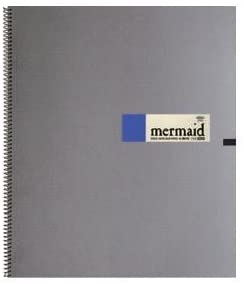
Holbein Sketchbook Mermaid Watercolor Paper (MS-F6)

This is the pick if you want a bound book rather than loose sheets. The Mermaid sketchbook is spring-bound with 18 sheets of 235gsm “coarse” (rough, natural-white) paper, sized F6 (roughly 32×41cm, a standard Japanese art paper size), at 4,993 JPY (about $32). Holbein’s own description notes the paper resists the waviness that comes from wetting the page, and that its texture suppresses uneven pigment pooling — useful if you’re doing loose watercolor spreads rather than tight botanical work.
The catch: it only comes in this one rough texture in this size, so if you prefer a smoother surface for detailed line-and-wash work, look at the Crester or Waterford options instead. Spring binding is also less travel-friendly than a hardcover — the coil can bend in a bag if you’re not careful.
Holbein Waterford Watercolor Paper Block (300g, EHBH-F6)

If you want archival-quality paper and don’t mind loose sheets, this Waterford block is the premium option here. It’s made by St Cuthberts Mill in England (a paper mill with a genuinely long history in fine watercolor paper) from 100% cotton, glued on all four sides so the paper won’t buckle as it dries — no taping or stretching needed. It’s 300gsm, “fine white” (smooth) texture, 12 sheets, F6 size, at 6,707 JPY (about $42).
The downside is straightforward: at roughly $3.50 a sheet, this is expensive for daily journaling, and a 12-sheet block runs out fast if you’re painting every day. You’ll also need a paper knife to cleanly separate each sheet from the glued block, which is an extra step compared to just tearing a page out of a spiral book.
Holbein Crester Watercolor Paper Spring Block (210g, CS-F4)

For a middle-ground price point, the Crester block uses a cotton-and-fine-pulp blend rated at 210gsm, spring-bound with 20 sheets, F4 size (roughly 27×24cm), at 3,376 JPY (about $21). Holbein markets this one as suited to watercolor, pastel, and colored pencil alike, and the spring binding flips back so a page doesn’t get lost or crinkled the way a bound book’s pages can.
At 210gsm it’s noticeably lighter than the Waterford block, so it will cockle more under a heavy wet wash — fine for light watercolor washes, ink, and mixed media, but don’t expect it to lie perfectly flat the way 300gsm cotton paper does.
For sketching and travel notes
Holbein Croquis Book NO.750 (A3, 60g)

Not every page needs to survive a wash. This croquis book is genuinely lightweight — 60g “N croquis” paper, 50 sheets, drawable on both sides, bound in a craft-paper cover, at 2,027 JPY (about $13). Holbein’s listing explicitly notes it works for general notes as well as croquis (quick figure sketches), which makes it a reasonable pick for fast travel journaling, gesture drawing, or daily-page pen-and-ink entries where you’re not adding water.
The A3 size (roughly 30×42cm) is large for a travel notebook — you’re not slipping this into a bag pocket the way you would a pocket Traveler’s Notebook insert — and at 60gsm, any wet media at all (even a damp brush pen) will show through or buckle the page. Treat it strictly as dry-media paper.
For mail art and postcard swaps
Holbein Postcard Pack Waterford (White)

For anyone into postcard swaps or watercolor mail art, this postcard pack is cut from the same 100% cotton Waterford stock as the paper block above, at 3,068 JPY (about $19). Painting on real cotton watercolor paper rather than standard cardstock makes a genuine difference for anyone doing a wet wash on a postcard-sized piece before mailing it.
One real caveat: the listing itself doesn’t specify the exact sheet count in this pack, so confirm the quantity on the product page before ordering if you need a specific number for a swap group. It also doesn’t include envelopes, so budget for those separately if you’re mailing internationally.
Holbein Picture Letter Set (ET-24)

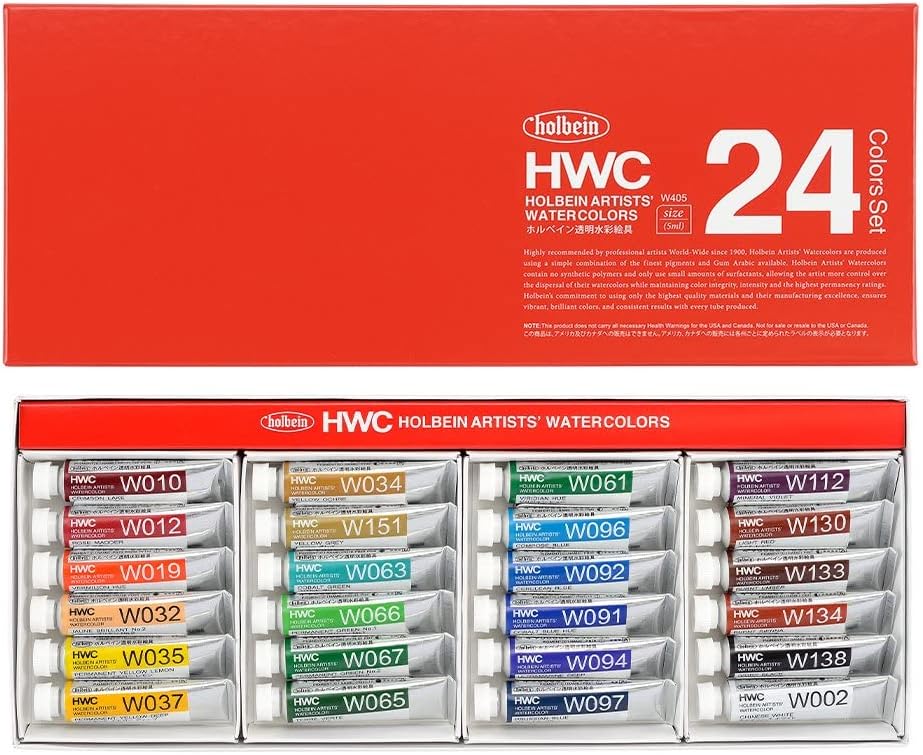
This is the splurge, and it’s also the most culturally specific item on this list. The ET-24 set is a full e-tegami (絵手紙, “picture letter”) kit: a lacquered letter box in a shochiku-ume (pine-bamboo-plum) pattern, a 24-color paint set, two brushes, a brush cylinder, and a small ceramic mixing plate, at 13,055 JPY (about $83). E-tegami is a real Japanese art tradition — founded by Kunio Koike in the 1960s — of painting postcard-sized scenes of everyday objects with loose ink linework and mineral-based watercolor, then mailing them to someone with a short handwritten note. It’s a genuinely different activity from just journaling on paper: part correspondence, part painting practice.
The obvious downside is price and commitment: this is a full paint kit, not blank paper, so it’s not what you want if you just need more pages. It’s also the kind of gift that assumes some interest in learning a new skill rather than a drop-in journaling supply, and the box and any included instructions are likely to be in Japanese.
Bonus: COPIC Too Copic Paper Selection Colored Paper

If watercolor paper is more commitment than you want right now, this colored paper set from Copic is a low-cost way to add texture to a journal or scrapbook layout. It’s a smooth, Western-style colored paper designed for clean pen writing (good color development, minimal fraying when erased), sold with a lightweight craft-cardboard portfolio for carrying it, at 1,365 JPY (about $9).
The listing doesn’t specify sheet count, size, or the number of colors, so this is more of a “grab it if the price is right” collage/decorating supply than a precisely specced product — don’t build a whole layout plan around a color count you haven’t confirmed on the product page first.
Comparison table
| Product | Type | Material/Weight | Approx. Price (Aug 2026) | Best For |
|---|---|---|---|---|
| Mermaid Sketchbook MS-F6 | Bound sketchbook | 235gsm, coarse texture, 18 sheets | ~$32 | Everyday watercolor journaling |
| Waterford Block EHBH-F6 | Loose paper block | 300gsm, 100% cotton, 12 sheets | ~$42 | Archival-quality wet media |
| Crester Spring Block CS-F4 | Bound paper block | 210gsm, cotton/pulp blend, 20 sheets | ~$21 | Mid-budget watercolor & mixed media |
| Croquis Book A3 | Bound sketchbook | 60gsm, craft cover, 50 sheets | ~$13 | Dry-media travel sketching & notes |
| Postcard Pack Waterford | Loose postcards | 100% cotton Waterford stock | ~$19 | Postcard swaps, mail art |
| Picture Letter Set ET-24 | Paint + paper kit | 24-color paint, brushes, ceramic dish | ~$83 | E-tegami gift / new skill |
| Copic Colored Paper Selection | Loose colored paper | Smooth, pen-friendly | ~$9 | Journal collage on a budget |
FAQ
Can I use fountain pen ink on watercolor paper, or is it just for painting?
Yes — the smoother “fine” textures (Waterford, Crester) take fountain pen ink well since they’re designed for controlled line work as well as washes, though the tooth of a “coarse” sketchbook like the Mermaid will make for a scratchier, less precise line. If you’re mainly writing rather than painting, pair one of these with a real fountain pen rather than a ballpoint — see our guide to Japanese pens for bullet journaling and planners for specific pen picks that work well with wetter paper.
What paper weight should I look for to avoid bleed-through and cockling?
For dry media (pencil, fineliner, light pen work) even 60-80gsm is fine. For any wet media — watercolor washes, brush pens, wet-blending markers — go for at least 200gsm to avoid heavy warping, and 300gsm cotton paper like the Waterford block if you want the page to stay genuinely flat without taping it down first.
Is this actually different from regular Japanese notebook paper, like Kokuyo or Midori?
Yes, meaningfully. Everyday Japanese notebook brands are optimized for smooth, fast writing at 70-90gsm and aren’t marketed as watercolor-grade paper. The Holbein products here are art-supply paper — rated by gsm and cotton content specifically because they’re meant to survive wet media — so it’s a different product category even though both count as “Japanese paper goods.”
Are these good gifts, and do they ship internationally with customs fees?
The Picture Letter Set and Postcard Pack make particularly good gifts for anyone into journaling or mail art. These ship from Japan via Discovery Japan Mall to more than 120 countries; expect roughly 10 business days for processing plus shipping time, and note that prices don’t include destination-country customs duties or VAT, which some countries apply above a certain order value.
I’m new to art journaling — should I start with a sketchbook or loose paper?
Start with a bound sketchbook like the Mermaid or Crester spring block. A bound book keeps pages in order and travels better than loose sheets, and both are priced well below the premium Waterford block, so you’re not risking much if the texture turns out not to suit your style. Move to loose Waterford sheets once you know you want archival-quality cotton paper for finished pieces.
Takeaway
You don’t need to buy into the full range here — a realistic starting kit is one bound sketchbook for daily watercolor journaling and a small postcard pack if you’re into mail art. Save the Waterford block for pieces you actually want to keep long-term, and treat the picture letter set as a gift or a deliberate “learn something new” purchase rather than a paper restock. Start with whichever price point matches how committed you already are to wet media — the $13 croquis book and the $83 letter set are both defensible first purchases depending on whether you’re testing the waters or diving in.
コメント