※本ページはプロモーションが含まれます
Disclosure: This post contains affiliate links. If you buy through them, we may earn a commission at no additional cost to you. Learn more.
If you want one Japanese pen that writes the moment you pick it up, survives a bag, and never smudges a planner page, the answer is an oil-based ballpoint — and the cheapest genuinely good one currently on the shelf is the Sailor Graceful Maki-e Shijin Genbu at 3,118 JPY (about $20), a knock-type 0.7mm pen on an anodized aluminum body. If you’d rather have something that lives on a desk and gets handed to guests, the Sailor Reglas in Bordeaux at 5,101 JPY (about $32) is the rotary-mechanism version of the same idea. Everything below is nine real, currently-stocked pens sorted by what you’d actually use them for, with the refill code, the mechanism, and the honest catch on each.
Prices are the mall’s listed JPY converted at roughly ¥158/USD as of August 27, 2026 — the exchange rate moves and so do listings, so treat the dollar figures as ballpark rather than checkout totals. If you’re after a gold nib instead, our Japanese fountain pen buying guide covers that ladder separately.
- Before you scroll: three things that decide which of these you want
- Everyday carry: knock-type pens under
- Desk pens: rotary mechanisms you turn rather than click
- Heirloom tier: pens you buy once
- Are these actually good for journaling, or are they just pretty?
- The nine, side by side
- FAQ
- Takeaway
- Related Articles
Before you scroll: three things that decide which of these you want
Knock versus rotary. A knock (click) pen deploys with a thumb press and is a one-handed, pocket-friendly tool. A rotary (twist) pen deploys by turning the barrel — slower, silent, and traditionally the “grown-up desk pen” format in Japan. Neither is better; they suit different hands and different rooms. Every pen below is labeled.
Oil-based ink is not gel ink. All nine of these are oil-based (油性) ballpoints, which is a genuinely different medium from the gel pens most planner people start with. JetPens’ own ballpoint versus gel breakdown puts it plainly: oil-based ink is a thick paste, so it lays down less ink, dries almost instantly, resists smudging and water, and rarely bleeds through — but it takes more pressure to write with, which means more hand fatigue over long sessions. If your priority is a page you can highlight over five seconds later, that trade is worth it. If your priority is effortless glide across ten pages of morning journaling, you may prefer gel — we covered that in Best Japanese Pens for Bullet Journaling & Planners.
“Maki-e” here mostly means printed maki-e. Several of these carry gorgeous lacquerwork patterns, and it is worth knowing exactly what you’re buying. Sailor’s listings describe the Graceful line’s finish as “the expression of the beautiful patterns of Japanese traditional craft Makie using modern technology” — in other words, a printed maki-e finish on anodized aluminum, not hand-applied urushi with sprinkled gold. It looks superb and costs $20 instead of $2,000. Just don’t buy it believing you’re getting hand-decorated lacquer, and don’t gift it with that description attached.
Everyday carry: knock-type pens under
Sailor Graceful Maki-e Shijin Genbu — the cheapest one worth owning

At 3,118 JPY (about $20), the Shijin Genbu in black is the entry point to this whole family. Knock type, 0.7mm ball, black oil-based ink, aluminum shaft in a matte anodized finish with the printed maki-e pattern over the top. The Genbu — the Black Tortoise, one of the Four Gods of Chinese and Japanese cosmology — is rendered in dark tones against black, which makes it the most office-neutral design in the range from arm’s length.
The refill is Sailor part 18-0104, sold separately, and that number matters more than anything else here: it’s the same refill across the whole Graceful knock line, so one spare box covers every pen you own from this family.
The catch: an aluminum barrel at this price is light — noticeably lighter than the rotary pens further down — and light plus the extra pressure oil-based ink demands is the classic recipe for hand fatigue. It’s a superb pen for meeting notes and margin annotations, and a mediocre one for writing three pages straight.
Sailor Graceful Maki-e Cherry Blossoms and Butterflies — the one to send as a gift

Mechanically identical to the Genbu — knock, 0.7mm, aluminum, 18-0104 refill — but the Cherry Blossoms and Butterflies in blue at 4,219 JPY (about $27) is the one people actually react to when they open the box. Sakura and butterflies over a deep blue anodized body: unmistakably Japanese, immediately legible as a gift, and cheap enough that you can send three.
The catch: you’re paying about $7 more than the Genbu purely for the pattern, and the pattern is printed, so it will wear at the grip section over years of daily use the way any printed finish does. If it’s going to live in a pocket rather than a drawer, the plainer Genbu ages better.
Sailor Graceful Maki-e Four Gods Byakko — the quiet metallic one

The Byakko in silver at 4,658 JPY (about $29) is the White Tiger of the same Four Gods set as the Genbu, on a silver anodized body. Same knock mechanism, same 0.7mm black, same 18-0104. This is the version to buy if you want the maki-e detail to read as texture rather than as a picture — at conversational distance it’s simply a nicely finished silver pen.
The catch: silver anodizing shows fingerprints and scuffs far more readily than the black or blue bodies, and there’s a black Byakko in the same range for roughly $5 less. Buy the silver only if you specifically want the lighter body.
Desk pens: rotary mechanisms you turn rather than click
Sailor Reglas — the default answer for a desk

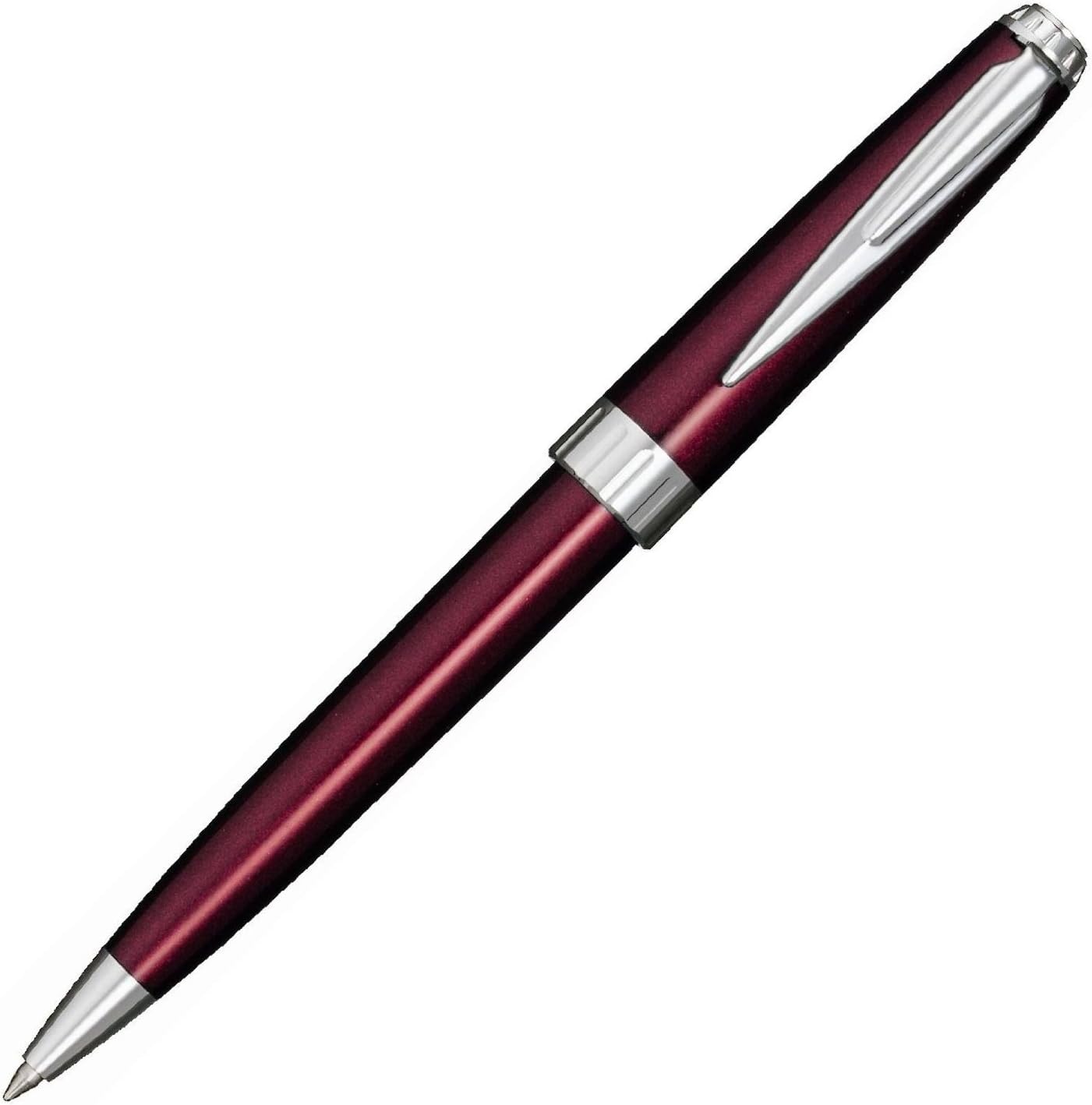
The Reglas is the pen most people in this roundup should actually buy. It’s the plain, well-proportioned Sailor twist ballpoint that does nothing clever and nothing wrong. Two colorways are in stock: Bordeaux at 5,101 JPY (about $32) and Brown at 7,321 JPY (about $46).
The silent twist deploy is the real argument for it. If you take notes in meetings, in libraries, or next to a sleeping baby, the absence of a click is not a small thing, and it’s the reason twist pens dominate Japanese office desks.
The catch: the mall’s Reglas listings carry no specification text at all — no weight, no stated ball diameter, no refill code. Sailor’s twist ballpoints in this class run 0.7mm and take Sailor’s standard twist refills, but you’re buying on the brand rather than on a datasheet, and the $14 gap between the two colorways is unexplained by anything visible in the listing. If you want the model documented before you spend, pick the Shiki Ori below instead.
Sailor Pensiero Verita — the one that isn’t metal

The Pensiero Verita in pink at 5,476 JPY (about $35) swaps the metal barrel for PMMA acrylic resin with pearl suspended in it, with nickel-chrome plated fittings. The listing gives real numbers: 15.5mm maximum diameter including the clip, 133mm long, rotary deploy, 0.7mm oily black, made in Japan.
That 15.5mm diameter is the point. It’s a genuinely wide barrel by Japanese standards, and a wider grip is the single most effective fix for the hand fatigue that oil-based ink causes. If the Graceful pens felt too thin and too light, this is the corrective.
The catch: pearlescent acrylic in pink is a specific aesthetic and this model doesn’t come in a neutral here. Acrylic also scratches more visibly than anodized aluminum, so it’s a desk pen rather than a keys-and-coins pocket pen.
Sailor Shiki Ori Harusora — the best-documented pen in the list

Shiki Ori (“woven seasons”) is a four-pen series, each keyed to a season: the pale blue of a clear spring sky, the deep green of summer foliage, the pale gold of the autumn full moon, and the camellia red showing through winter snow. Harusora — spring sky — is the light blue one, at 8,184 JPY (about $52). Rotary type, PMMA resin cap and tip in sky blue with metal accents, 0.7mm, refill 18-0103 sold separately.
Note that refill code: 18-0103 for the rotary pens, 18-0104 for the Graceful knock pens. They are not interchangeable, and this is the mistake people make when they own both.
The catch: $52 for a ballpoint is real money, and what you’re buying over the $32 Reglas is a color story and a documented spec sheet rather than a different writing experience. Also, the appeal of a four-pen seasonal set is that you own the set — and only Harusora is currently stocked here, so the other three seasons mean sourcing elsewhere.
Heirloom tier: pens you buy once
Platinum #3776 Celluloid Midnight Ocean — the material is the product

At 20,460 JPY (about $129), the Platinum #3776 Celluloid in Midnight Ocean is the first pen here where the barrel material is the reason to buy. Celluloid is the pre-plastic material fountain pen bodies were made from before acrylic took over: it’s cut from rod stock that has been aged for months, it has genuine three-dimensional depth rather than a printed pattern, and every barrel’s figuring is different. The listing describes it as “a rotating three-dimensional and vivid pattern” — that depth is what you’re paying for, and photographs consistently undersell it.
Specs are stated: 135.5mm long, 12.4mm maximum diameter, rhodium-plated parts, 0.7mm ball, black oil-based dye ink, refills BSP-200B or BSP-100N.
The catch: celluloid is flammable, sensitive to heat and prolonged UV, and can discolor if you leave it on a sunny windowsill for years. It also demands the occasional wipe-down; unlike anodized aluminum, it’s a material that rewards care. And at 12.4mm this is a slim barrel — less comfortable for long sessions than the 15.5mm Pensiero at a quarter of the price.
Sailor Classic Ko Makie Bunbo — the gift-a-retirement pen

The Classic Ko Makie Bunbo, Floret Dot in gray at 34,031 JPY (about $215) is the top of this catalog’s ballpoint range and the only one that ships in a manufacturer’s presentation case with a manual. Rotary oil-based, 0.7mm medium black, gray maki-e over PMMA resin with gold IP metal fittings, approximately 134mm long, 15.5mm maximum diameter including the clip, 22.3g.
That 22.3g is the number to notice. It is substantially heavier than the aluminum Graceful pens and heavy enough that the pen’s own mass does much of the work of pressing oil-based ink onto paper — which is exactly what you want for a pen someone will use to sign things.
The catch: $215 for a ballpoint asks a specific question, and the honest answer is that it does not write meaningfully better than the $32 Reglas. You are buying presentation, weight, and the box. Note too that the maki-e here is applied over PMMA resin rather than urushi lacquer over wood — beautiful, durable, and not the museum-grade craft object the price might suggest. Buy it as a gift with an occasion attached, not as a daily driver upgrade.
Are these actually good for journaling, or are they just pretty?
Genuinely good, with one caveat about volume. Oil-based ink’s whole personality is that it dries on contact and doesn’t move afterward. For a journal that means: no smearing under your left hand, no lifting when you highlight or wash a page with watercolor, no ghosting through thin planner paper, and no fading if the notebook gets damp. That’s a better archival story than most gel inks offer out of the box.
The caveat is throughput. Ballpoint ink is a paste, so you press harder, and pressing harder for forty minutes hurts in a way that a gel pen doesn’t. The practical setup a lot of people land on is a ballpoint for anything that needs to survive — dated entries, addresses, signatures, anything going near water — and a gel or fountain pen for long-form writing. If you’re doing the second thing more than the first, start with the wide-barreled Pensiero Verita rather than a slim aluminum Graceful, because grip diameter is the lever that actually reduces the fatigue.
The nine, side by side
| Pen | Mechanism | Ball / refill | Body | Approx. price | Best for |
|---|---|---|---|---|---|
| Sailor Graceful Maki-e Shijin Genbu | Knock | 0.7mm / 18-0104 | Anodized aluminum | 3,118 JPY (~$20) | Cheapest good daily carry |
| Sailor Graceful Maki-e Cherry Blossoms & Butterflies | Knock | 0.7mm / 18-0104 | Anodized aluminum | 4,219 JPY (~$27) | Sending as a gift |
| Sailor Graceful Maki-e Four Gods Byakko | Knock | 0.7mm / 18-0104 | Anodized aluminum, silver | 4,658 JPY (~$29) | Understated metallic look |
| Sailor Reglas Bordeaux | Rotary | Not stated | Metal | 5,101 JPY (~$32) | Silent all-rounder desk pen |
| Sailor Pensiero Verita Pink | Rotary | 0.7mm | PMMA acrylic with pearl, 15.5mm | 5,476 JPY (~$35) | Wide grip, less hand fatigue |
| Sailor Reglas Brown | Rotary | Not stated | Metal | 7,321 JPY (~$46) | Warmer colorway of the Reglas |
| Sailor Shiki Ori Harusora | Rotary | 0.7mm / 18-0103 | PMMA resin, sky blue | 8,184 JPY (~$52) | Seasonal color, documented specs |
| Platinum #3776 Celluloid Midnight Ocean | Rotary | 0.7mm / BSP-200B | Celluloid, 12.4mm | 20,460 JPY (~$129) | Material depth, collectors |
| Sailor Classic Ko Makie Bunbo Floret Dot | Rotary | 0.7mm M / n.s. | PMMA + maki-e, 22.3g, cased | 34,031 JPY (~$215) | Formal gift with a box |
FAQ
Do Japanese oil-based ballpoints smudge or bleed through planner paper?
Much less than gel ink. Oil-based ballpoint ink is a thick paste, so less of it transfers to the page, it dries essentially on contact, and it’s water-resistant once dry. That combination means it rarely bleeds through thin planner or Bible paper and won’t smear under your hand or under a highlighter. The trade-off is that you have to press harder than with gel, which is the source of the hand fatigue people complain about.
Which refill does each pen take, and can I mix them?
No, don’t mix them. Sailor’s Graceful knock-type pens — the Shijin Genbu, Cherry Blossoms and Butterflies, and Byakko here — all take refill 18-0104. The rotary Shiki Ori takes 18-0103. The Platinum #3776 Celluloid takes BSP-200B or BSP-100N. Refills are sold separately in every case, and the Reglas listings don’t state a code at all, so budget for a trip to a Sailor refill chart if you buy one.
Is the maki-e on these pens real hand-applied lacquer?
On the Graceful line, no. Sailor’s own listing text describes the finish as expressing traditional maki-e patterns “using modern technology” — a printed maki-e finish over anodized aluminum. It looks excellent and it’s the reason a maki-e-patterned pen costs $20 instead of four figures. The Classic Ko Makie Bunbo at the top of the range is a step up in execution but is still maki-e over PMMA resin rather than urushi over wood. Enjoy them for what they are, and be accurate about it if you’re gifting one.
Knock or rotary — which should I get?
Knock if the pen lives in a pocket or bag and gets used one-handed in short bursts; you can deploy it with the same hand that holds it and the mechanism is more tolerant of being knocked around. Rotary if the pen lives on a desk, gets used in quiet rooms, or is going to be handed to someone; the twist deploy is silent and reads as more formal. Rotary pens in this list are also generally heavier, which helps with oil-based ink.
How long does shipping from Japan take, and will I pay customs?
Discovery Japan Mall ships internationally from Japan, so plan on roughly one to three weeks depending on the service and destination rather than domestic-style delivery. Import duty and tax are the buyer’s responsibility and depend entirely on your country’s threshold — in much of the EU and UK, VAT applies from the first dollar, while the US de minimis threshold is far higher. A $20 pen usually slips through; a $215 cased maki-e pen may not, so factor that in before ordering the top of this list.
Takeaway
Buy the ballpoint that matches the room it will live in. For a bag, the $20 Shijin Genbu is genuinely all the pen most people need, and its 18-0104 refill will keep it going for years. For a desk, the Reglas in Bordeaux at $32 is the sensible default and the silent twist is worth more than it sounds. Spend up only for a specific reason: the Pensiero Verita’s 15.5mm barrel if your hand cramps, the Platinum Celluloid if you want a material with actual depth, the Classic Ko Makie Bunbo if there’s an occasion and a box involved. And keep the medium in perspective — oil-based ink is the archival, never-smudges choice, not the effortless-glide choice. If it’s glide you’re after, our fountain pen buying guide starts where this list ends.

コメント